


Understanding Laminated Dough: Mastering Croissants & Puff Pastry Techniques for Authentic French Pastries
Laminated dough is a cornerstone of French pastry, renowned for its flaky, airy texture that elevates pastries like croissants and puff pastry. This article delves into the intricacies of laminated dough, exploring its essential role in creating these beloved treats. Readers will learn about the mechanics behind the dough, the differences between croissant and puff pastry, and how to achieve the perfect layers. Many home bakers struggle with achieving the desired flakiness and texture in their pastries. Understanding laminated dough provides a solution, enabling bakers to create authentic French pastries at home. We will cover the definition and importance of laminated dough, the differences between croissant and puff pastry, the techniques used by De Ma Vie Bakery, popular viennoiserie pastries, and where to find the best French pastries in Falls Church, VA.
What is Laminated Dough and Why is it Essential in French Pastry?
Laminated dough is a type of pastry dough that incorporates layers of butter and dough through a process called lamination. This technique creates thin layers that puff up during baking, resulting in a light and flaky texture. The importance of laminated dough in French pastry cannot be overstated, as it is the foundation for many classic pastries, including croissants and puff pastry. The historical context of laminated dough dates back to the 17th century, with early versions appearing in Austrian and Central European baking traditions, and it was refined in French bakeries in the 19th century, leading to the exquisite pastries we enjoy today.
The fundamental principles of dough lamination, involving the strategic layering of fat and dough, are crucial for achieving the desired lift and flaky texture in pastries.
Dough Lamination: Fat Layers, Lift & Flakiness
The process of dough lamination, or the creation of alternating layers of dough and fat, is a technique used in various pastries. The layer of fat, often butter or margarine, creates an impenetrable barrier to the steam, or water vapor, produced by surrounding dough layers. This facilitates lift within the pastry and while many types don’t contain yeast, lamination becomes crucial to the finalized shape and volume of the product. The more layers of fat, the more supposed lift a pastry can undergo, however, as folds increase, the thinning of each fat layer also increases the likelihood of fracture or pooling together unevenly. Thus, too much fracturing can result in a loss of gas retention and lift as well as decrease the flakiness. Consequently, a balance must be fo
Effects of Folding on Laminated Dough, 2023
The journey of the croissant, a prime example of viennoiserie, from its historical roots to its modern cultural significance, further illustrates the profound impact of laminated dough on global culinary traditions.
The Authentic Croissant: Origins, Evolution, and Cultural Significance
This investigation draws on concepts that have shaped the discipline of folklore since its inception to exact a fresh encounter with a transnationally popular item of Viennoiserie: the crescent-shaped pastry known as the croissant. Their application to this ephemeral foodways item sheds light on the croissant’s roots, dissemination, and distinct permutations. I discuss the origins of the pastry in the light of historic-geographic methodologies; its diffusion and evolution with reference to scholarship on tradition bearers, oikotypification, intertextuality and the role of the individual in perpetuating a tradition; and matters of its commodification and authenticity through consideration of how tradition functions in the modern age. Finally, through an autoethnographic approach, I draw on personal experience to consider one way in which croissant consumption may be traditionalized.
The way of the Croissant: Traditional perspectives on a traditional pastry, R Hopkin, 2016
How Does Laminated Dough Create Flaky Layers?
The process of lamination involves folding and rolling the dough multiple times, creating layers of butter between the dough. When baked, the water in the butter turns to steam, causing the layers to separate and puff up. This results in the characteristic flaky texture that is a hallmark of high-quality pastries. Techniques such as the book fold and letter fold are commonly used to achieve the desired number of layers, typically resulting in 27 to 81 layers depending on the number of folds.
Further scientific inquiry into the precise mechanics of dough lamination reveals how the number and integrity of these layers critically influence the final volume and flakiness of pastries.
Mastering Croissant Flakiness: The Science of Laminated Dough Folding
The purpose of this experiment is to determine the effect on volume, flakiness, and air cell size and amount in basic croissants when the dough is folded less than and more than what’s currently considered standard. The process of dough lamination, or the creation of alternating layers of dough and fat, is a technique used in various pastries. The layer of fat, often butter or margarine, creates an impenetrable barrier to the steam, or water vapor, produced by surrounding dough layers. This facilitates lift within the pastry and while many types don’t contain yeast, lamination becomes crucial to the finalized shape and volume of the product. The more layers of fat, the more supposed lift a pastry can undergo, however, as folds increase, the thinning of each fat layer also increases the likelihood of fracture or pooling together unevenly. Thus, too much fracturing can result in a loss of gas retention and lift as well as decrease the flakiness. Consequently, a balance must be fo
Effects of Folding on Laminated Dough, 2023
What Are the Key Ingredients in Laminated Dough?
The key ingredients in laminated dough include flour, water, salt, and, most importantly, butter. Each ingredient plays a crucial role in the final product. High-quality butter is essential for flavor and creating the flaky layers, while the flour provides structure. Water activates the gluten, allowing the dough to stretch and hold its shape during the lamination process. The importance of using quality ingredients cannot be overstated, as they directly impact the texture and flavor of the finished pastry.
What Are the Differences Between Croissant Dough and Puff Pastry?
Croissant dough and puff pastry are both types of laminated dough, but they differ significantly in their ingredients and preparation methods. Understanding these differences is crucial for any aspiring baker.
How Does Yeast Affect Croissant Dough Compared to Puff Pastry?
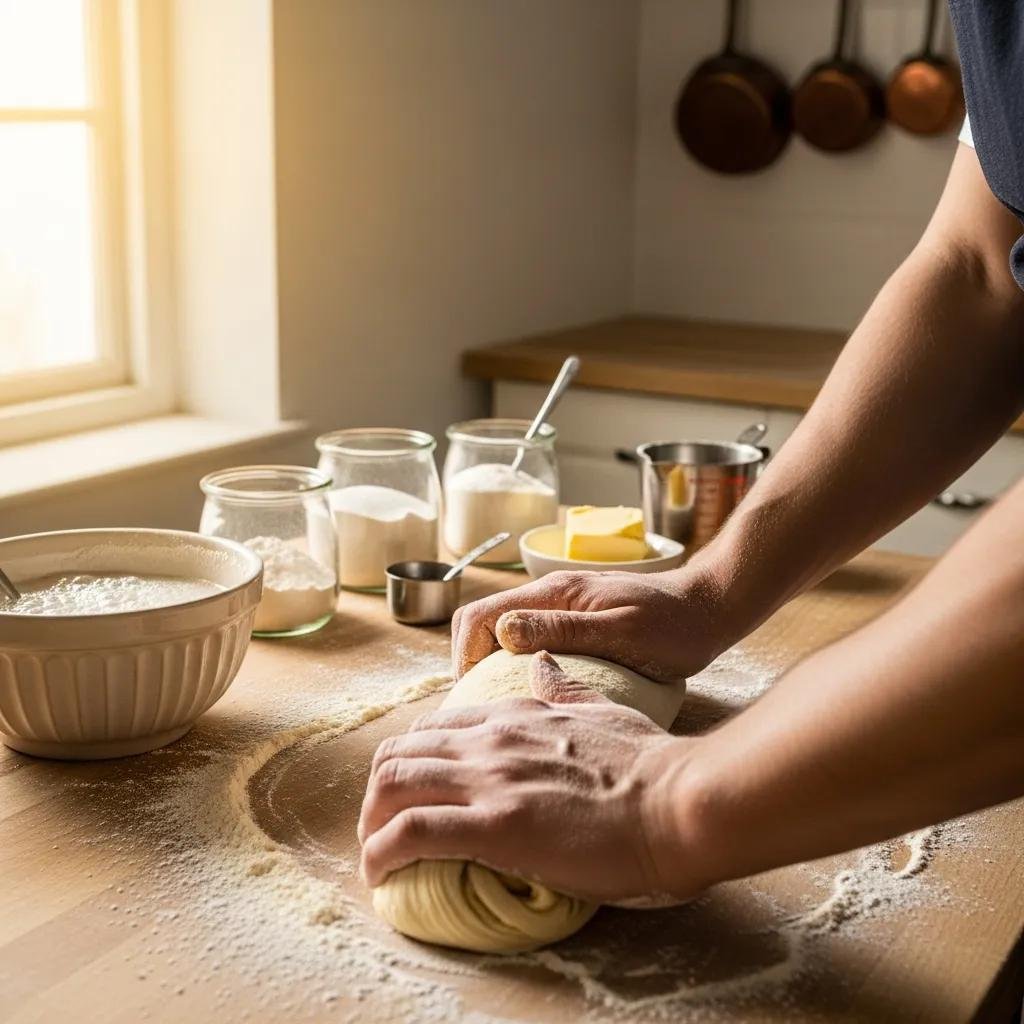
Yeast is a key ingredient in croissant dough, providing leavening and contributing to its unique flavor. The fermentation process allows the dough to rise, creating a light and airy texture. In contrast, puff pastry relies solely on the steam generated from the layers of butter for leavening, resulting in a denser texture. This fundamental difference in leavening agents leads to distinct flavor profiles and textures in the final pastries.
What Makes Croissants a Viennoiserie Pastry?
Croissants are classified as a type of viennoiserie, which refers to a category of French pastries that are made from a yeast-leavened dough. This classification is significant because it highlights the unique characteristics of croissants, such as their flaky texture and buttery flavor. Other examples of viennoiserie include pain au chocolat and brioche, which also utilize enriched doughs; however, brioche is not laminated, while pain au chocolat is made with laminated dough similar to croissants.
How Does De Ma Vie Bakery Craft Authentic French Croissants and Puff Pastry?
De Ma Vie Bakery is renowned for its commitment to traditional French pastry techniques, particularly in the crafting of croissants and puff pastry. The bakery employs time-honored methods to ensure the highest quality in its products.
What Traditional Techniques Does De Ma Vie Use in Lamination?
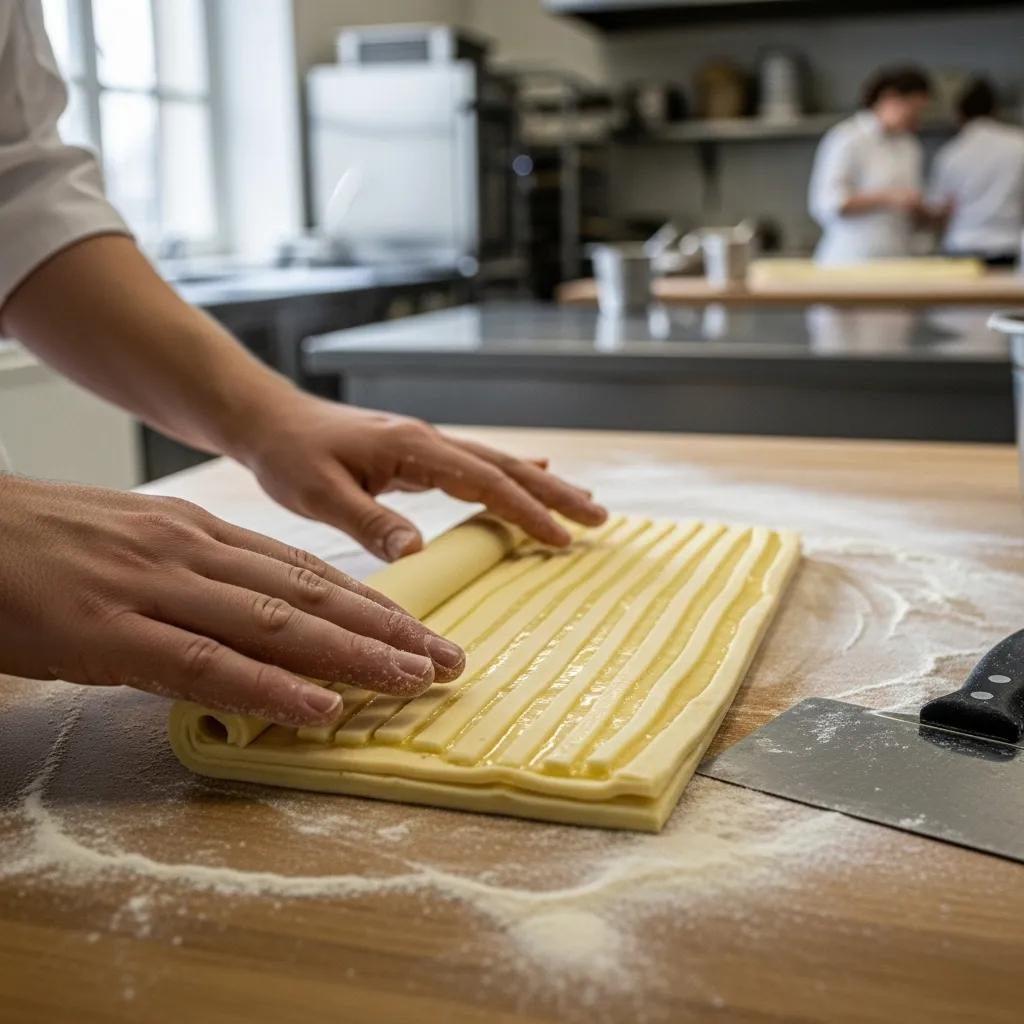
At De Ma Vie Bakery, the lamination process is executed with precision, utilizing a combination of temperature control and expert folding techniques. The butter is kept at a specific temperature to ensure it remains pliable, allowing for even distribution throughout the dough. This meticulous approach results in perfectly layered pastries that are both flaky and flavorful.
Which Signature Laminated Pastries Are Offered at De Ma Vie?
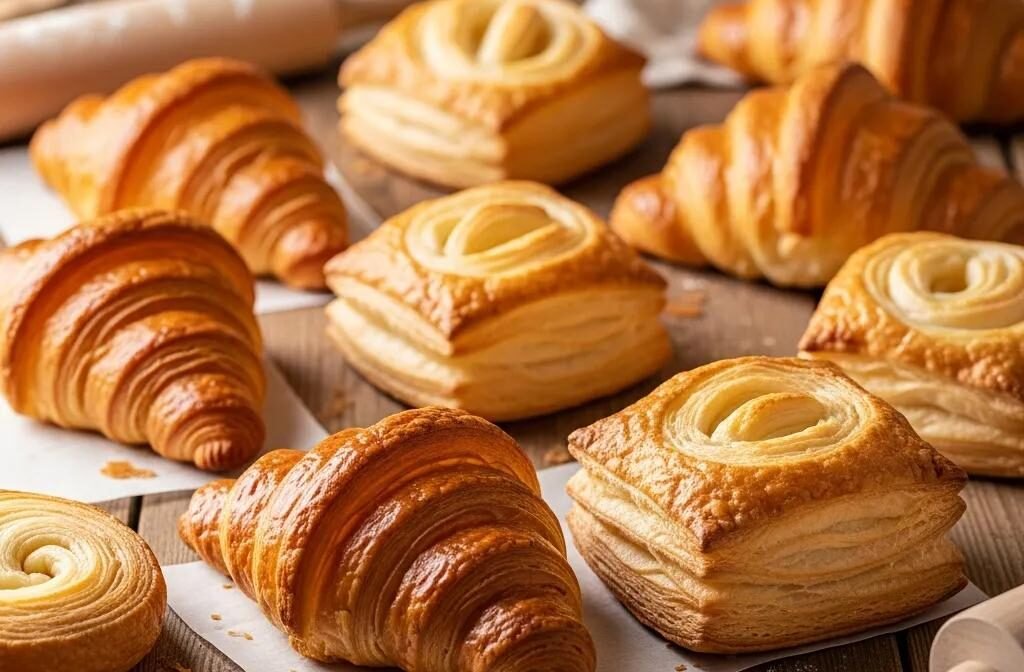
De Ma Vie Bakery offers a variety of signature laminated pastries, including classic croissants, pain au chocolat, and the exquisite Mille-Feuille. Each pastry is crafted with care, using high-quality ingredients and traditional techniques to deliver an authentic French experience. Specialty flavors and seasonal variations are also available, showcasing the bakery’s creativity and commitment to quality.
What Are Popular Viennoiserie Pastries Beyond Croissants?
While croissants are perhaps the most famous viennoiserie, there are many other delightful pastries that utilize laminated dough techniques.
How Do Brioche and Kouign-Amann Differ in Dough and Preparation?
Brioche is a rich, buttery bread that is slightly sweet and has a soft texture, achieved through the incorporation of eggs and sugar into the dough. In contrast, Kouign-Amann is a Breton pastry that combines laminated dough with sugar, resulting in a caramelized exterior and a rich, buttery flavor. The preparation methods for these pastries differ significantly, with brioche requiring a longer fermentation time and Kouign-Amann involving a unique folding technique that incorporates sugar into the layers.
What Other French Pastries Use Laminated Dough Techniques?
Other notable French pastries that utilize laminated dough techniques include the classic Mille-Feuille, which features layers of puff pastry filled with pastry cream, and Palmiers, which are made from rolled and sliced laminated dough coated in sugar. Each of these pastries showcases the versatility of laminated dough and the skill required to create them.
Where Can You Find the Best French Croissants and Laminated Pastries in Falls Church, VA?
For those seeking authentic French pastries in Falls Church, VA, De Ma Vie Bakery stands out as a premier destination.
Why Choose De Ma Vie Bakery for Authentic French Pastries?
De Ma Vie Bakery is dedicated to providing high-quality, authentic French pastries made with traditional techniques. The bakery’s commitment to using only the finest ingredients ensures that each pastry is a true representation of French culinary artistry. Customers can expect a warm, inviting atmosphere and exceptional service, making it a beloved spot for pastry lovers.
How to Visit or Order from De Ma Vie Bakery in Falls Church?
Located at 7787 Leesburg Pike, Falls Church, VA 22043, De Ma Vie Bakery welcomes visitors to enjoy its delicious offerings in person. For those unable to visit, the bakery also provides online ordering options, allowing customers to enjoy their favorite pastries from the comfort of their homes. Whether dining in or ordering out, De Ma Vie Bakery promises an authentic French pastry experience.
| Ingredient | Role | Importance |
|---|---|---|
| Flour | Structure | Provides the base for the dough |
| Butter | Flavor | Creates flaky layers and rich taste |
| Water | Activation | Activates gluten for elasticity |
| Salt | Flavor | Enhances overall taste |
This table highlights the essential ingredients in laminated dough and their respective roles, emphasizing the importance of each component in achieving the perfect pastry.
Laminated dough is a fascinating and essential aspect of French pastry making, offering a world of possibilities for both professional bakers and home enthusiasts. By understanding the techniques and ingredients involved, anyone can master the art of creating flaky, delicious pastries that are sure to impress.