
Comprehensive Glossary of French Baking Terminology: Essential French Baking Terms Dictionary for Enthusiasts
French baking is a rich tapestry of techniques, ingredients, and traditions that have captivated culinary enthusiasts around the world. This comprehensive glossary aims to demystify the essential French baking terminology, providing readers with a deeper understanding of the language of French pastries and breads. By exploring key terms, readers will learn how to navigate the intricate world of French baking, enhancing their culinary skills and appreciation for this art form.
Many aspiring bakers struggle with the nuances of French terminology, which can be a barrier to mastering recipes and techniques. This glossary serves as a valuable resource, breaking down complex terms into accessible definitions. The article will cover key categories in French baking terminology, essential pastry words, fundamental bread vocabulary, essential baking techniques, common ingredients, and how De Ma Vie Bakery integrates these terms into its offerings.
Indeed, the global prevalence of French culinary terms often stems from their concise nature, making them universally adopted in the baking industry.
French Culinary Jargon: Origin & Global Use in Baking
The purpose of this project was to find out the impact of the French jargon used in the culinary and pastry industry and its origin. French words are used in the kitchen globally and not translated because usually is one word or less words than other languages to describe a certain technique. French words are also used for recipe names which are also typically not translated into other languages for simplicity.
French in Culinary and Pastry Arts, 2021
What Are the Key Categories in French Baking Terminology?
French baking terminology can be categorized into several key areas, each representing a unique aspect of the culinary art. Understanding these categories is crucial for anyone looking to delve into French baking, as they provide a framework for the various terms and techniques used in the kitchen. The main categories include pastries, breads, techniques, and ingredients, each with its own set of specialized vocabulary. This structured approach not only aids in learning but also enhances the overall baking experience by allowing bakers to communicate more effectively about their craft.
How Are French Pastry Terms Defined and Classified?
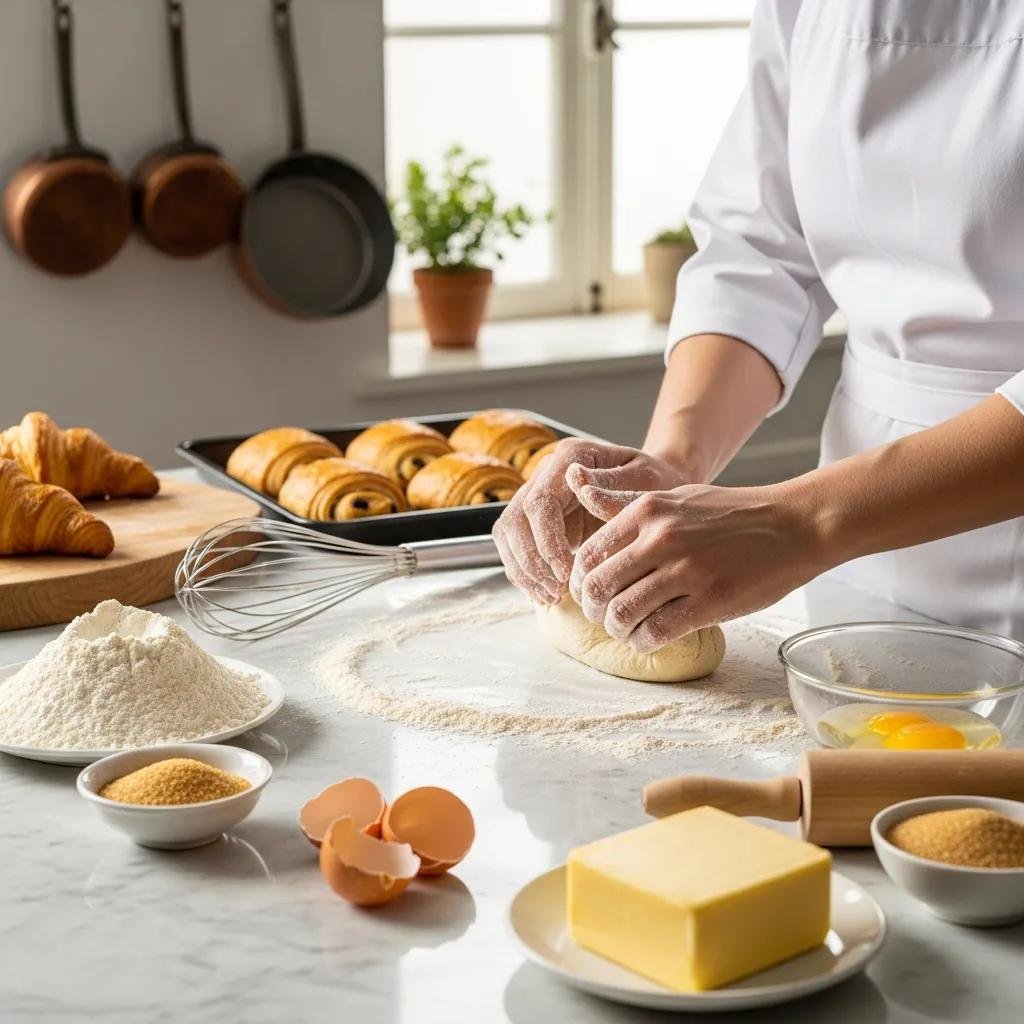
French pastry terms are defined and classified based on their characteristics and preparation methods. For instance, the term “pâtisserie” refers both to the art of pastry making and to a shop specializing in pastries, while “viennoiserie” encompasses a category of baked goods that includes items like croissants and brioche. These classifications help bakers understand the specific techniques and ingredients associated with each type of pastry, making it easier to replicate traditional recipes.
The significance of these classifications lies in their ability to guide bakers in selecting the right terms for their creations, ensuring authenticity in their baking endeavors.
What Constitutes French Bread Vocabulary and Its Importance?
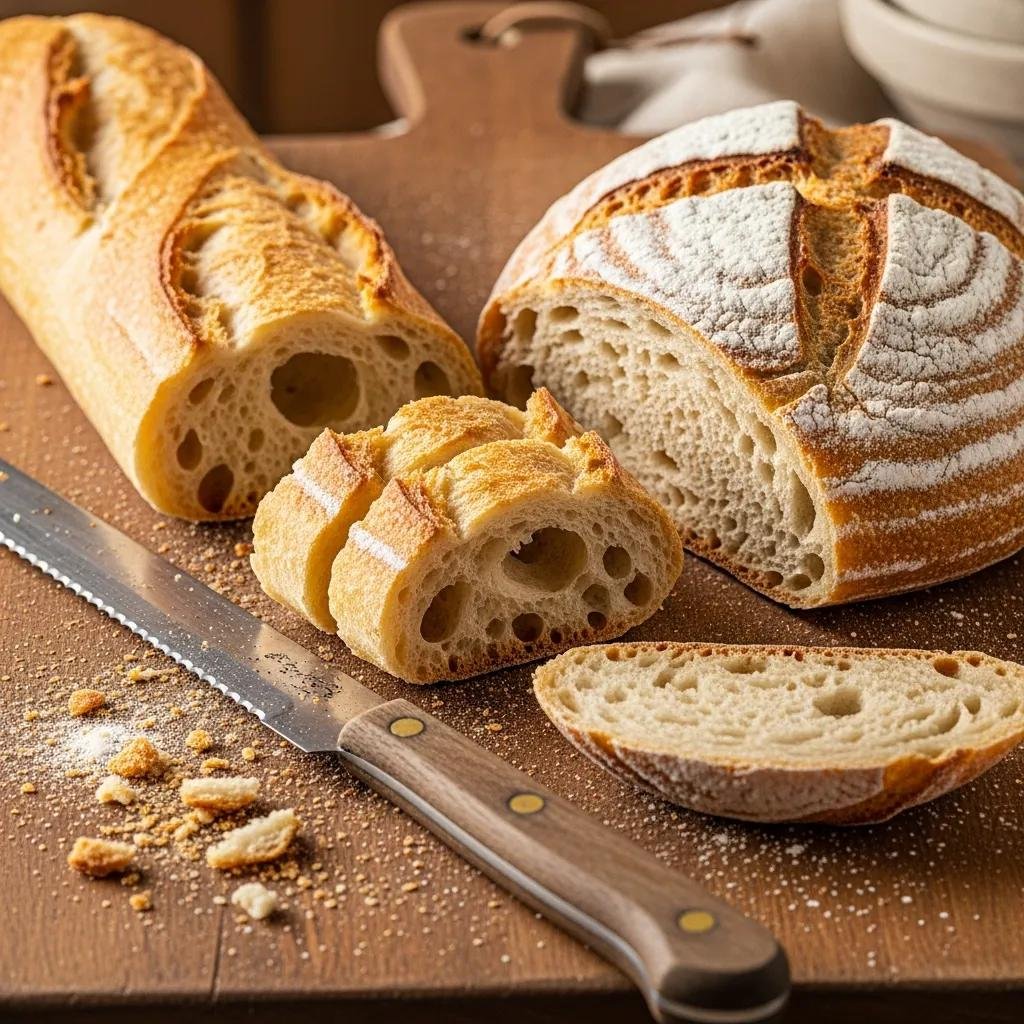
French bread vocabulary is essential for understanding the cultural significance of bread in French cuisine. Key terms include “baguette,” which is a long, thin loaf known for its crispy crust and soft interior, and “pain de campagne,” a rustic country bread traditionally made with a mix of white, whole wheat, and sometimes rye flours. These terms not only describe the bread itself but also reflect the traditions and regional variations found throughout France.
Understanding this vocabulary is important for bakers who wish to create authentic French breads, as it connects them to the rich history and culture of French baking.
Which Essential French Pastry Words Should You Know?
Familiarity with essential French pastry words is crucial for anyone interested in mastering the art of French baking. These terms encompass a variety of pastries, each with its own unique characteristics and preparation methods. By learning these words, bakers can better understand recipes and techniques, leading to more successful baking outcomes.
What Are the Characteristics of Popular French Pastries Like Croissant and Macaron?
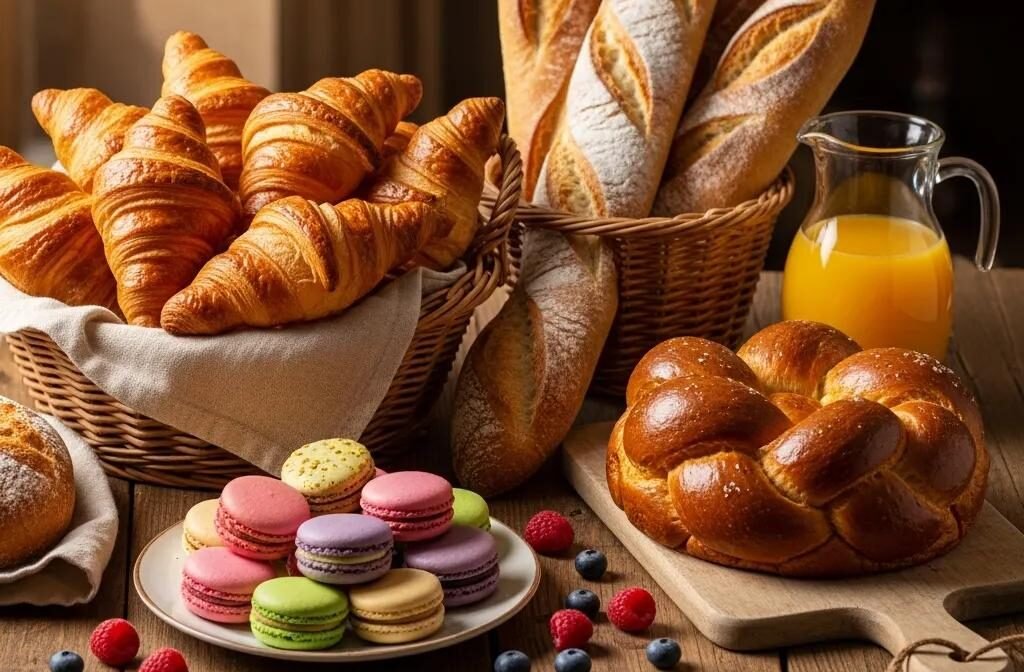
Popular French pastries such as croissants and macarons are celebrated for their distinct textures and flavors. Croissants are known for their flaky, buttery layers, achieved through a process of lamination, while macarons are delicate meringue-based cookies made from almond flour, egg whites, and sugar, filled with ganache, buttercream, or jam. Each pastry requires specific techniques and ingredients, making it essential for bakers to understand their characteristics to replicate them accurately. The unique preparation methods and flavor profiles of these pastries highlight the artistry involved in French baking.
How Do Terms Like Pâtisserie and Viennoiserie Relate to French Pastries?
The terms “pâtisserie” and “viennoiserie” are integral to understanding French pastries. Pâtisserie refers to the art of pastry making and the wide range of sweet baked goods produced, while viennoiserie specifically refers to yeast-leavened pastries that are often enriched with butter and eggs and typically enjoyed at breakfast. These terms categorize pastries based on their preparation methods and ingredients, providing bakers with a clearer understanding of the types of pastries they are working with. Recognizing these distinctions is vital for anyone looking to master French pastry techniques.
What Are the Fundamental French Bread Vocabulary Terms?
Understanding fundamental French bread vocabulary is essential for anyone interested in baking authentic French bread. This vocabulary includes terms that describe various types of bread, their ingredients, and their preparation methods. By familiarizing themselves with these terms, bakers can enhance their skills and create traditional French breads with confidence.
How Are Baguette, Pain de Campagne, and Brioche Defined?
The baguette, pain de campagne, and brioche are three iconic types of French bread, each with its own unique definition and characteristics. A baguette is a long, thin loaf with a crispy crust and a light, airy crumb, traditionally made from wheat flour, water, yeast, and salt. Pain de campagne is a rustic country bread typically made from a mixture of white, whole wheat, and sometimes rye flours, often using a natural leaven or sourdough starter. Brioche, on the other hand, is a rich, buttery bread enriched with eggs and sugar, often used for sweet dishes or as a base for desserts.
Understanding these definitions allows bakers to appreciate the diversity of French bread and the techniques required to create each type.
What Makes Fougasse and Sourdough Unique in French Baking?
Fougasse and sourdough are two unique types of French bread that stand out for their distinct characteristics. Fougasse is a flatbread often shaped decoratively and flavored with herbs, olives, or other additions, originating from Provence. Sourdough refers to bread made using a natural fermentation process involving wild yeast and lactic acid bacteria, resulting in a tangy flavor and chewy texture. Each type of bread requires specific techniques and ingredients, making them essential for bakers to understand. The unique preparation methods and flavor profiles of these breads highlight the creativity and tradition inherent in French baking.
Which French Baking Techniques Are Essential to Understand?
Mastering essential French baking techniques is crucial for anyone looking to excel in the art of baking. These techniques encompass a range of methods used in the preparation of pastries and breads, each contributing to the final product’s quality and authenticity. Understanding these techniques allows bakers to replicate traditional recipes with confidence and precision.
What Does Mise en Place Mean in French Baking?
Mise en place is a fundamental concept in French baking that refers to the practice of preparing and organizing all ingredients and tools before starting to bake. This technique ensures that bakers have everything they need at hand, allowing for a smoother and more efficient baking process. By implementing mise en place, bakers can focus on the creative aspects of baking without the distraction of searching for ingredients or tools mid-recipe. This practice is essential for achieving consistent results in French baking.
How Are Techniques Like Pétrir and Cuire à Blanc Explained?
Techniques like pétrir (to knead) and cuire à blanc (to blind bake) are vital for successful French baking. Pétrir involves working dough to develop gluten, which gives bread its structure and texture. Cuire à blanc, on the other hand, is a technique used to pre-bake pastry shells before adding fillings, often involving lining the pastry with parchment paper and weights to prevent puffing. Understanding these techniques is essential for bakers, as they form the foundation of many French recipes. Mastery of these methods allows bakers to create high-quality pastries and breads with ease.
What Are the Common French Baking Ingredients and Their Roles?
Familiarity with common French baking ingredients and their roles is essential for anyone looking to create authentic French baked goods. Each ingredient plays a specific role in the baking process, contributing to the final product’s flavor, texture, and appearance. Understanding these ingredients allows bakers to make informed choices when selecting products for their recipes.
How Are Ingredients Like Farine, Beurre, and Levure Used?
Farine (flour), beurre (butter), and levure (yeast) are fundamental ingredients in French baking, each serving a distinct purpose. Farine provides the structure for baked goods, while beurre adds richness, flavor, and tenderness. Levure is essential for leavening, allowing dough to rise and develop a light texture. In French baking, levure can refer to either fresh yeast (levure fraîche) or dry yeast (levure sèche), depending on the recipe.
Understanding how these ingredients interact is crucial for achieving successful baking outcomes. By mastering the use of these key ingredients, bakers can create a wide range of traditional French baked goods.
What Are the Different Types of Crème in French Baking?
In French baking, various types of crème are used to enhance flavors and textures in pastries. Common types include crème pâtissière (pastry cream), crème fraîche (a cultured cream with a slightly tangy flavor), and crème chantilly (sweetened whipped cream). Each type of crème serves a specific purpose, whether as a filling, topping, or base for other desserts. Understanding the differences between these types of crème allows bakers to select the appropriate one for their recipes, ensuring the desired flavor and texture in their creations.
How Does De Ma Vie Bakery Integrate French Baking Terminology Locally?
De Ma Vie Bakery is an authentic French bakery that brings a slice of Paris to the local community. By integrating French baking terminology into its offerings, the bakery enhances the customer experience and educates patrons about the art of French baking. This approach not only showcases the bakery’s commitment to authenticity but also fosters a deeper appreciation for the craft among its customers.
Which Glossary Terms Correspond to De Ma Vie Bakery’s Menu Items?
At De Ma Vie Bakery, several menu items correspond to key glossary terms, enriching the customer experience. For example, the bakery offers classic croissants, which exemplify the term “viennoiserie,” and a variety of artisanal baguettes that highlight the importance of traditional French bread vocabulary. By using these terms in their menu descriptions, the bakery helps customers connect with the culinary heritage of French baking, making their visit more informative and enjoyable.
How Does the Bakery’s Community Experience Enhance Understanding of French Baking?
The community-focused café experience at De Ma Vie Bakery enhances understanding of French baking by providing opportunities for customers to engage with the craft. Through workshops, tastings, and events, the bakery fosters a sense of community while educating patrons about the techniques and terminology of French baking. This interactive approach not only deepens customers’ appreciation for the art but also encourages them to explore their own baking endeavors at home.