
Elevate Your French Baking Skills
Authentic French baking relies on precise technique, time‑honoured methods and the right equipment. This guide outlines the essential tools for classic French breads and pastries and explains how accurate measurement and gentle dough handling help you reproduce a true “slice of Paris” at home. Consistency is the main challenge for many home bakers; selecting suitable equipment shortens the learning curve. Below we cover precision measurement, traditional tools, iconic moulds and pans, finishing implements and advanced machines that improve results.
Why is precision measurement crucial in French baking?
Precision delivers consistent texture, balance and structure. Exact weights and temperatures produce the intended crumb and finish in breads, pastries and desserts. Purpose‑built measuring tools cut variability so you can reproduce recipes reliably.
The importance of precise measurement in bread making—particularly for French loaves—is supported by research into product structure and the physics of baking.
French Bread Baking: Precision, Materials, and Measurement
Bread has been a basic foodstuff for thousands of years. This product requires energy, time, and a very precise dexterity. Only a few simple ingredients are used. The bread maker seems to be a kind of magician. In this chapter, we describe briefly its current state of the art and then present the materials used and the methods of measurement. We highlight the links between the kinetics of mass loss from a French loaf of bread, the variation in the relative humidity of the air as it comes out of the oven, and the thickness of the product, which is linked with the internal pressure. Stress is put on use of image analysis for quantifying properties such as the distribution of the bread 3D air cells or the impact of steam on the porosity and the microstructure (e.g., size of starch grains).
French Bread Baking, A Sommier, 2016
How does an electronic kitchen scale ensure baking accuracy?
Weighing by mass is the most reliable method, especially for flour and ingredients with variable density. A good electronic scale gives tare, unit switching (grams/ounces) and steady readings so you can hit hydration and ratio targets precisely.
What role do digital thermometers play in perfecting French pastries?
Digital thermometers give exact temperatures for ingredients and internal bakes—critical for custards, enriched doughs and tempering. Accurate readings help you avoid under‑ or overcooking and reproduce the intended textures.
How do traditional tools shape French dough and pastries?
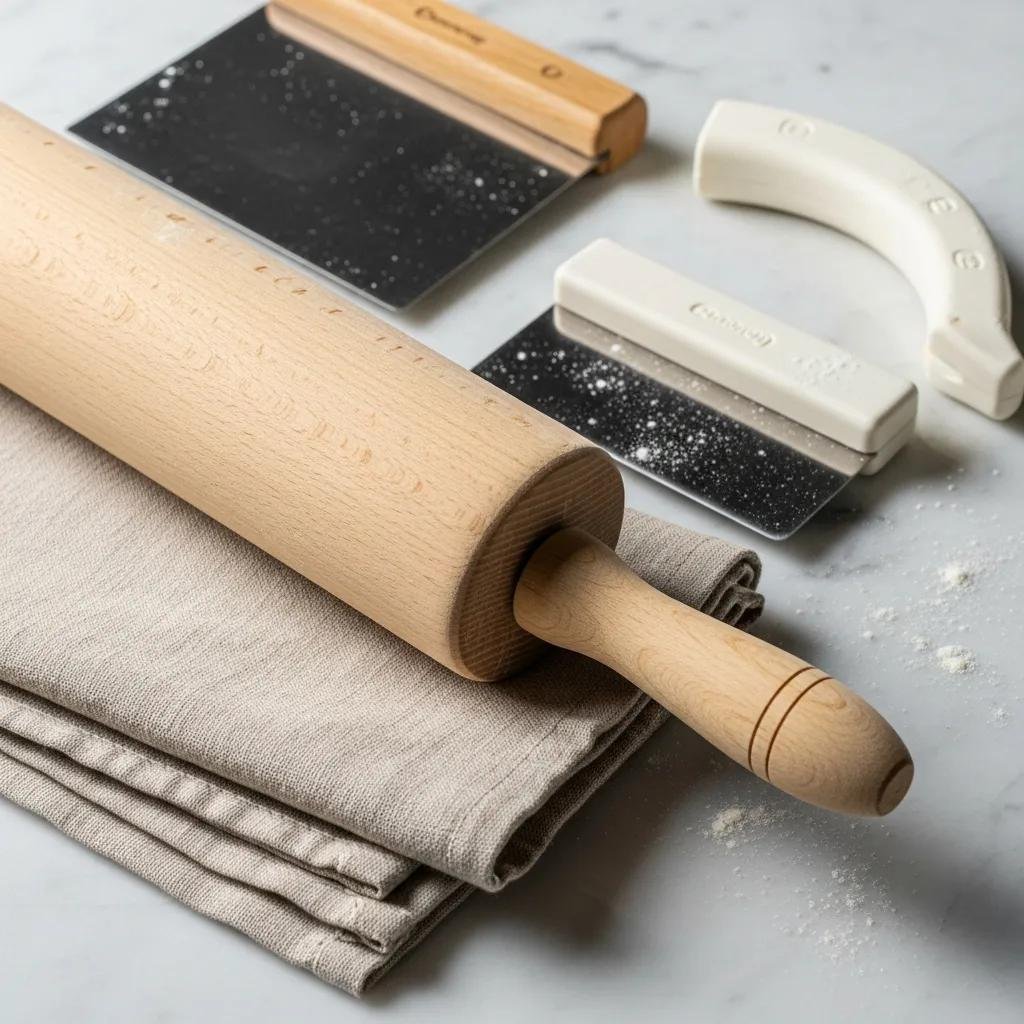
Traditional tools are made for French techniques: lamination, shaping, proofing and delicate finishes. Their shapes and materials support predictable handling and reliable results.
What makes the French rolling pin ideal for delicate doughs?
The tapered French rolling pin gives direct tactile control and even pressure. That reduces overworking and helps produce flaky, tender crusts.
How do dough scrapers and baker's couches aid in dough preparation?
Dough scrapers cut and lift sticky dough cleanly, reducing waste. A baker’s couche supports shaped pieces during proofing so they hold form and develop an even crust. Used together they speed handling and improve repeatability.
Which iconic molds and pans are essential for classic French confections?
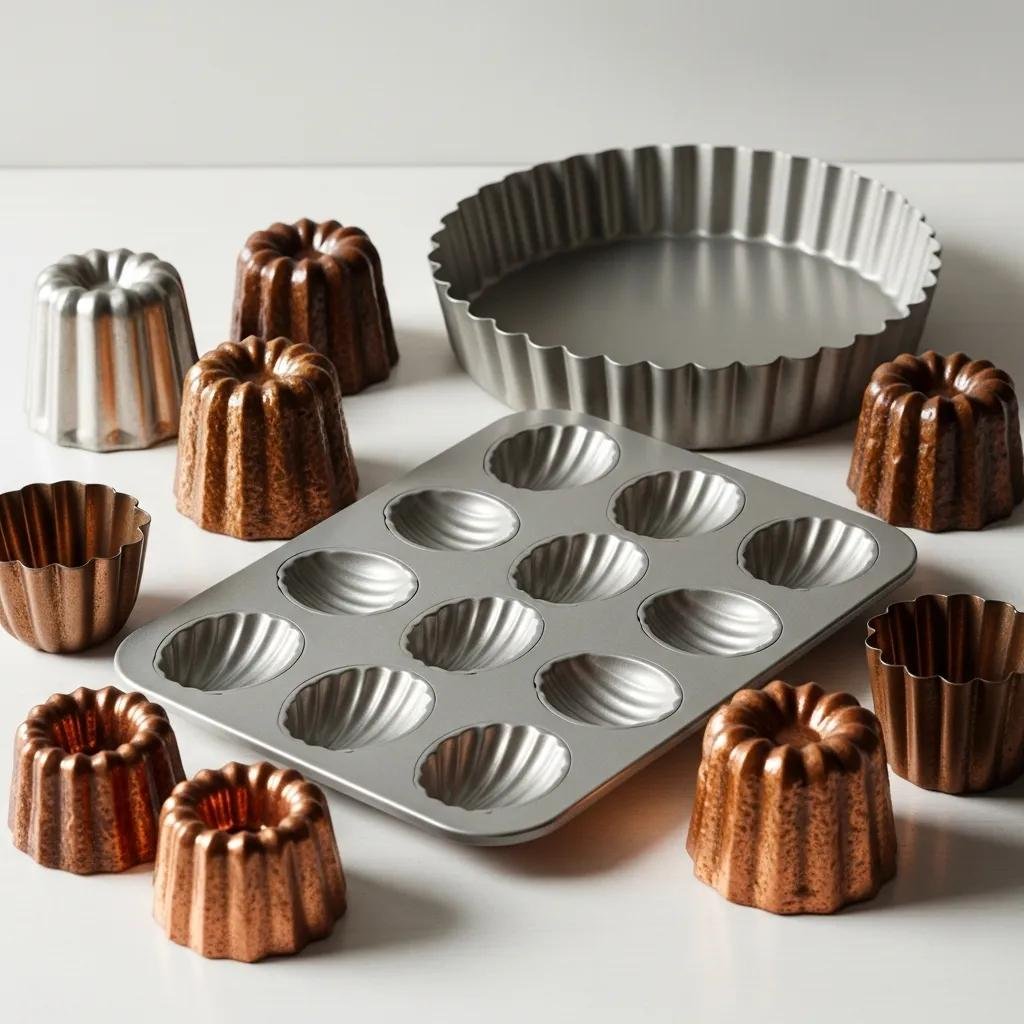
Moulds and pans determine shape, bake profile and texture. Using the correct bakeware helps you achieve the signature rise, crust and crumb that make these confections authentic.
How do madeleine pans create the signature shell shape?
Madeleine pans form the scalloped shell and encourage even browning and the characteristic hump. Well‑designed cavities improve release and preserve the delicate crumb.
What benefits do copper cannelé molds and tart pans offer?
Copper cannelé moulds conduct heat exceptionally well, producing a deeply caramelised exterior with a custardy interior. Tart pans with removable bottoms make unmoulding clean and professional. Both offer finer control of bake colour and texture.
| Mold Type | Material | Key Benefit |
|---|---|---|
| Madeleine Pan | Metal | Creates signature shell shape |
| Copper Cannelé Mold | Copper | Excellent heat conductivity |
| Tart Pan | Metal | Removable bottom for easy release |
Choosing the right mould streamlines the process and preserves the traditional appearance and texture of French pastries.
What finishing tools enhance the artistry of French baking?
Finishing tools refine texture, add sheen and apply decorative detail—lifting a bake from homemade to professional in both appearance and mouthfeel.
How are offset spatulas and balloon whisks used in pastry finishing?
Offset spatulas smooth glazes and creams for clean edges. Balloon whisks incorporate air into creams and meringues to create light, voluminous textures—small tools that deliver polished results.
Why are pastry brushes and piping bags vital for decoration?
Pastry brushes apply glazes and egg washes for colour and shine. Piping bags control the placement of creams and decorations for precise presentation.
How can advanced equipment elevate your French baking experience?
Advanced equipment raises consistency and reduces hands‑on time so you can focus on technique and flavour. These tools broaden the range of recipes you can execute well at home.
What advantages do stand mixers provide in a French bakery?
Stand mixers manage heavy doughs and long mixing tasks efficiently and consistently. They excel at kneading, whipping and mixing; attachments expand their capabilities.
How do immersion blenders and chocolate tempering machines improve results?
Immersion blenders produce smooth purées and sauces for fillings. Tempering machines control chocolate cooling and melting to achieve correct snap and sheen—essential for coating and moulding.
The right tools—from precise scales and thermometers to traditional moulds and modern appliances—are fundamental to mastering French baking. For an authentic taste, De Ma Vie Bakery offers croissants, baguettes, and macarons made with the same attention to method and ingredient. Visit us at 7787 Leesburg Pike, Falls Church, VA 22043 to sample our offerings.
Frequently Asked Questions
What is the importance of using traditional French baking techniques?
Traditional French techniques prioritise artistry and exactness to create authentic pastries and breads. Passed down through generations, these methods focus on ingredient quality, temperature control and specific dough handling. Mastering them improves flavour and texture and connects bakers to France’s culinary heritage.
How can I improve my dough handling skills for French pastries?
Improving dough handling takes practice and a feel for the dough’s properties. Learn the differences between well‑ and under‑kneaded dough. Use tools like a dough scraper to manage sticky mixes, and practise folding and lamination to build structure. Instructional videos can provide clear visual guidance.
What types of flour are best for French baking?
The choice of flour affects the final product. All‑purpose flour is versatile, but Type 55 flour—commonly used in France—gives more authentic results for breads and many pastries due to its moderate protein content. For lighter, flakier pastries use pastry or cake flour. Always check protein content to match your recipe.
How does humidity affect French baking?
Humidity influences dough handling and baking outcomes. High humidity can make dough sticky and harder to shape; low humidity can dry ingredients and lower effective hydration. Adjust flour and hydration ratios for local conditions and monitor the proofing environment to maintain consistency.
What are some tips for achieving the perfect crust on French bread?
For a crisp crust use high‑quality flour and correct hydration. Introduce steam during the first minutes of baking to promote oven spring and crust formation. A baking stone or steel helps retain heat for even baking. Cool loaves completely on a wire rack to preserve crust integrity.
Can I use alternative sweeteners in French pastry recipes?
Alternative sweeteners can work, but you’ll need adjustments. Honey or maple syrup add flavour and extra moisture. Granulated substitutes like stevia or erythritol differ in sweetness and texture. Test small batches to balance sweetness and maintain the pastry’s structure.
Conclusion
Mastering authentic French baking depends on tools that enhance precision and technique. Investing in quality equipment helps you achieve consistent results and elevate your skills. Experience the artistry of French pastries at De Ma Vie Bakery, where croissants, baguettes and macarons are crafted with care. Discover how the right tools can transform your baking journey.


