
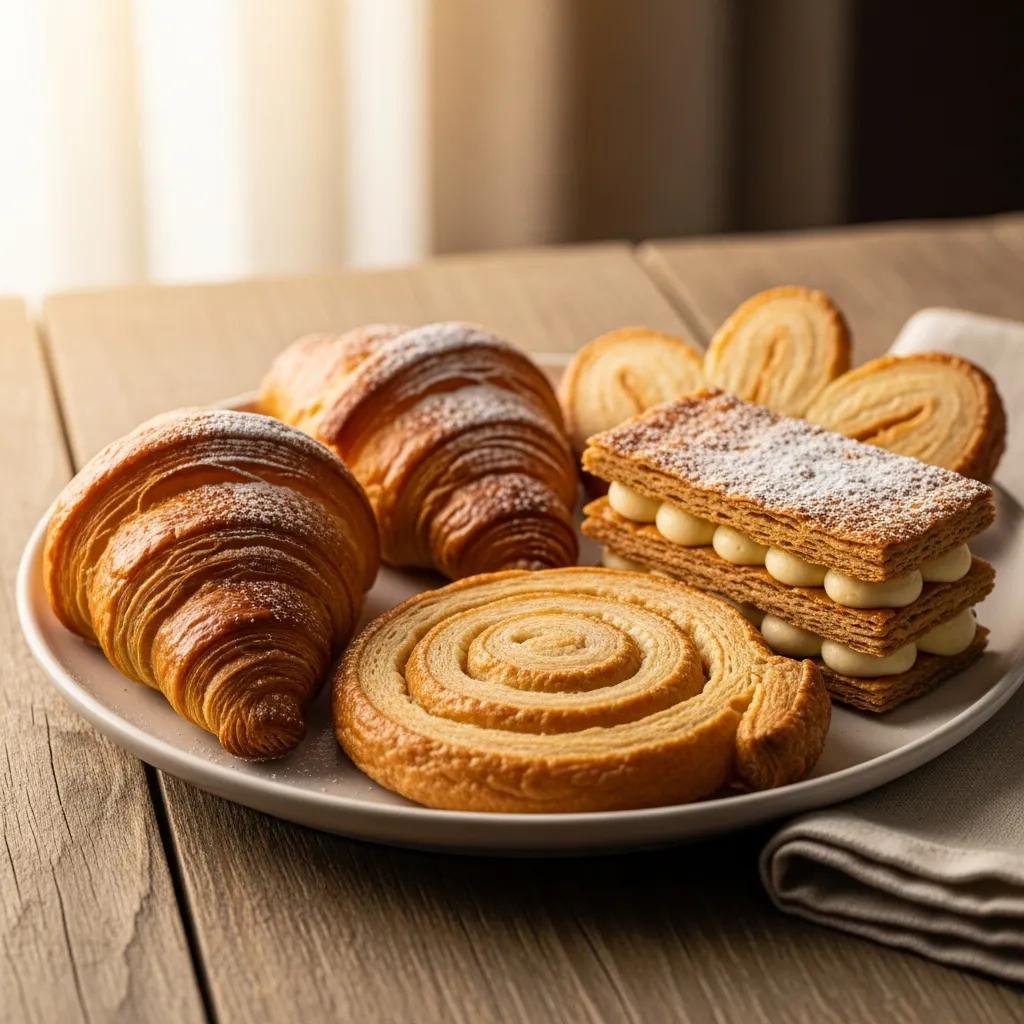
Secrets to Making Flaky Homemade French Puff Pastry: Master the Art of Authentic Laminated Dough
Creating flaky homemade French puff pastry is a culinary art that combines technique, precision, and a touch of patience. This guide will delve into the secrets behind mastering authentic laminated dough, ensuring that your pastries achieve that coveted flaky texture. Readers will learn about the essential characteristics of puff pastry, the lamination process, and key techniques that contribute to its success. Many home bakers struggle with achieving the perfect flakiness, often resulting in dense or soggy pastries. However, with the right methods and understanding, anyone can create light, airy, and delicious puff pastry. This article will cover the definition and importance of puff pastry, the lamination process, essential techniques, how De Ma Vie Bakery crafts its signature pastries, and tips for enjoying puff pastry at home.
What Is French Puff Pastry and Why Is Flakiness Essential?
French puff pastry, known as “pâte feuilletée,” is a light, flaky pastry made from layers of dough and butter. The unique texture is achieved through a meticulous lamination process, where the dough is repeatedly folded and rolled to create thin layers. This technique not only contributes to the pastry’s signature flakiness but also enhances its ability to rise during baking, resulting in a delicate and airy final product. The cultural significance of puff pastry in French cuisine cannot be overstated, as it serves as the foundation for many beloved pastries, including mille-feuille and vol-au-vent.
Research further defines puff pastry as a light and flaky laminated dough, with ongoing studies focused on optimizing its quality.
Defining Flaky Laminated Puff Pastry
Puff pastry is a light and flaky pastry made of laminated dough, and research focuses on finding the optimal conditions processing for fat-reduced puff pastry with comparable quality.
Optimization of fat-reduced puff pastry using response surface methodology, E Zannini, 2017
Defining Puff Pastry: Characteristics and French Origins
Puff pastry is characterized by its multiple layers, which are created by encasing cold butter in dough and rolling it out repeatedly. This process results in a pastry that puffs up when baked, creating a light and flaky texture. The origins of puff pastry can be traced back to the 17th century in France, where it was refined into the delicate pastry we know today. Its versatility allows it to be used in both sweet and savory dishes, making it a staple in French baking.
Why Flaky Texture Matters in French Pastry
The flakiness of puff pastry is crucial for both taste and presentation. A well-executed puff pastry should have a crisp exterior that gives way to tender, airy layers inside. This texture not only enhances the eating experience but also elevates the visual appeal of the pastry. Consumers often associate flakiness with quality, making it an essential characteristic for any successful pastry.
Indeed, the quality of laminated pastries is intrinsically linked to achieving that desired flaky crust, a characteristic highly valued by consumers.
Butterfat & Flaky Laminated Pastry Quality
with beautifully flaky crust. Once considered a delicacy, pastries have now become innocuous in our everyday lives. Once requiring a skillful hand to sculpt and bake pastries are now
Impact of butterfat content and composition on the quality of laminated pastries, 2020
Further studies confirm that a high degree of lamination is directly correlated with the desired flaky crust, which significantly impacts consumer acceptance.
Achieving Flaky Crusts Through Lamination
The highest ranking samples in the acceptability analysis were symmetric, presented very flaky crusts and had a high level of lamination.
Relationships between structural fat properties with sensory, physical and textural attributes of yeast-leavened laminated salty baked product, AE de la Horra, 2017
How Does Lamination Create Flaky Layers in Puff Pastry?
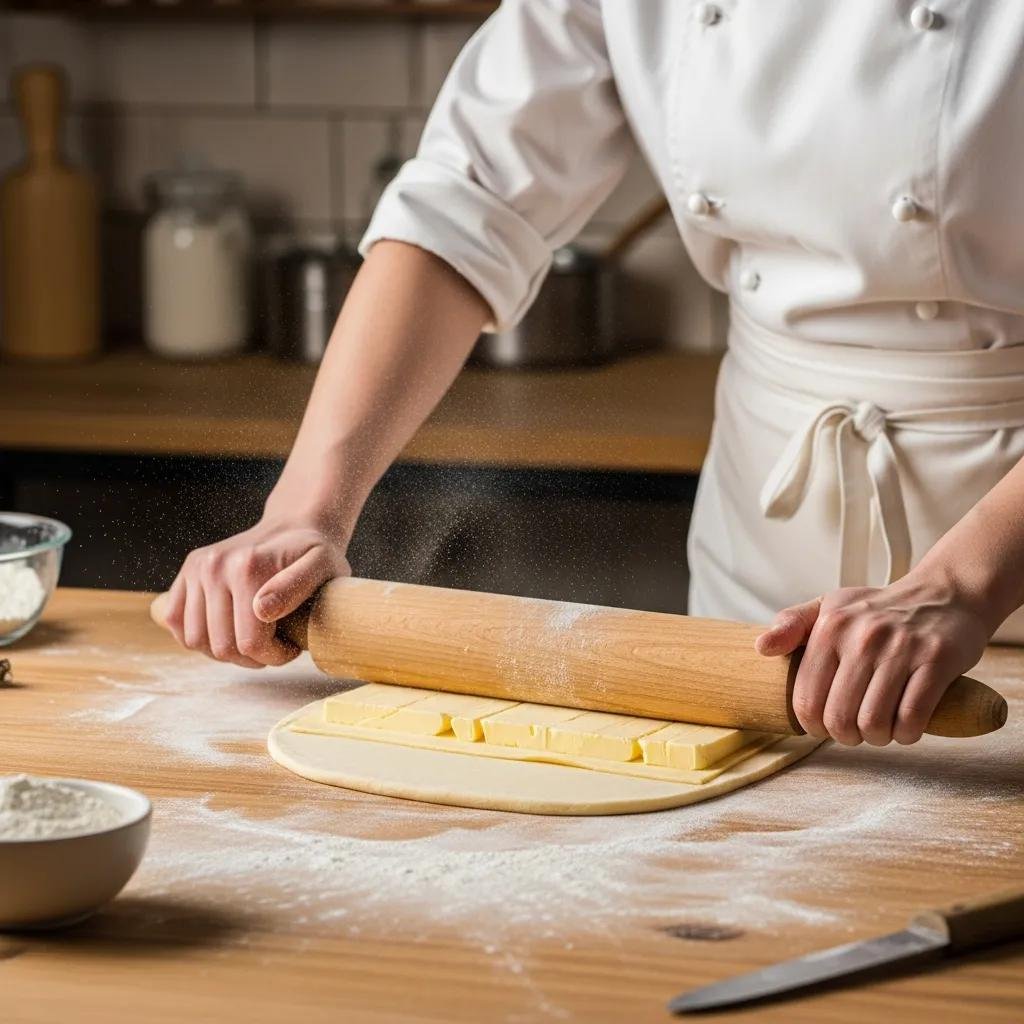
Lamination is the process that creates the distinct layers in puff pastry, allowing it to achieve its signature flakiness. This technique involves folding and rolling the dough multiple times, incorporating cold butter at each stage. The interaction between the butter and dough during this process is what ultimately leads to the light, airy texture that defines puff pastry.
Further emphasizing the foundational role of this technique, one source elaborates on the precise steps involved in creating laminated dough.
Puff Pastry Lamination: Dough & Fat Layering
The preparation of puff pastry starts with elaboration of a simple dough, which is then combined with a fat layer and repeatedly folded and rolled. This process is crucial for pastry development and provides each laminated product with its own specificities. Therefore, while a puff pastry
Baking: Laminated Bakery Products, C Blecker, 2021
What Is the Lamination Process in French Baking?
The lamination process consists of several key steps. First, a block of cold butter is encased in a sheet of dough. The dough is then rolled out into a rectangle and folded over itself, creating layers. This process is repeated several times, typically involving six “turns” (folds), with chilling periods in between to maintain the butter’s firmness. Each fold multiplies the layers, resulting in a pastry that can rise beautifully when baked.
How Do Butter and Dough Interact During Folding?
The interaction between butter and dough is critical during the folding process. Cold butter creates steam when heated, which causes the layers to separate and puff up. The temperature of the butter is essential; if it is too warm, it will blend into the dough rather than create distinct layers. Proper folding techniques ensure that the butter remains intact, allowing for optimal flakiness in the final product.
The precise interaction of fat and dough during baking is what ultimately drives the pastry’s characteristic lift and flakiness.
Puff Pastry Lifting & Lamination Baking
is critical for puff pastry lifting, there is currently no scientific evidence on the role of. laminated dough from the final lamination step (left) until the end of baking (right). After lamination, fat
Baking: Laminated Bakery Products, C Blecker, 2021
What Are the Key Techniques for Achieving Flaky Homemade Puff Pastry?
Achieving flaky homemade puff pastry requires attention to detail and specific techniques that enhance the lamination process. Understanding these techniques can significantly improve the quality of your pastries.
Why Is Cold Butter Crucial for Puff Pastry Success?
Using cold butter is vital for the success of puff pastry. Cold butter maintains its structure during the rolling and folding process, allowing it to create steam when baked. This steam is what causes the layers to separate and rise, resulting in a flaky texture. It is recommended to use butter that is around 40°F (4°C) for optimal results.
How Many Folds and Turns Are Needed for Perfect Layers?
Typically, six turns (folds) are used to create the desired number of layers in puff pastry. Each turn should be followed by a chilling period to allow the gluten to relax and the butter to firm up. This process not only enhances the flakiness but also prevents the dough from becoming tough. Timing between folds is crucial; allowing the dough to rest ensures that the layers remain distinct and do not merge.
How Does De Ma Vie Bakery Craft Signature Puff Pastries Like Le Palmier and Mille-Feuille?
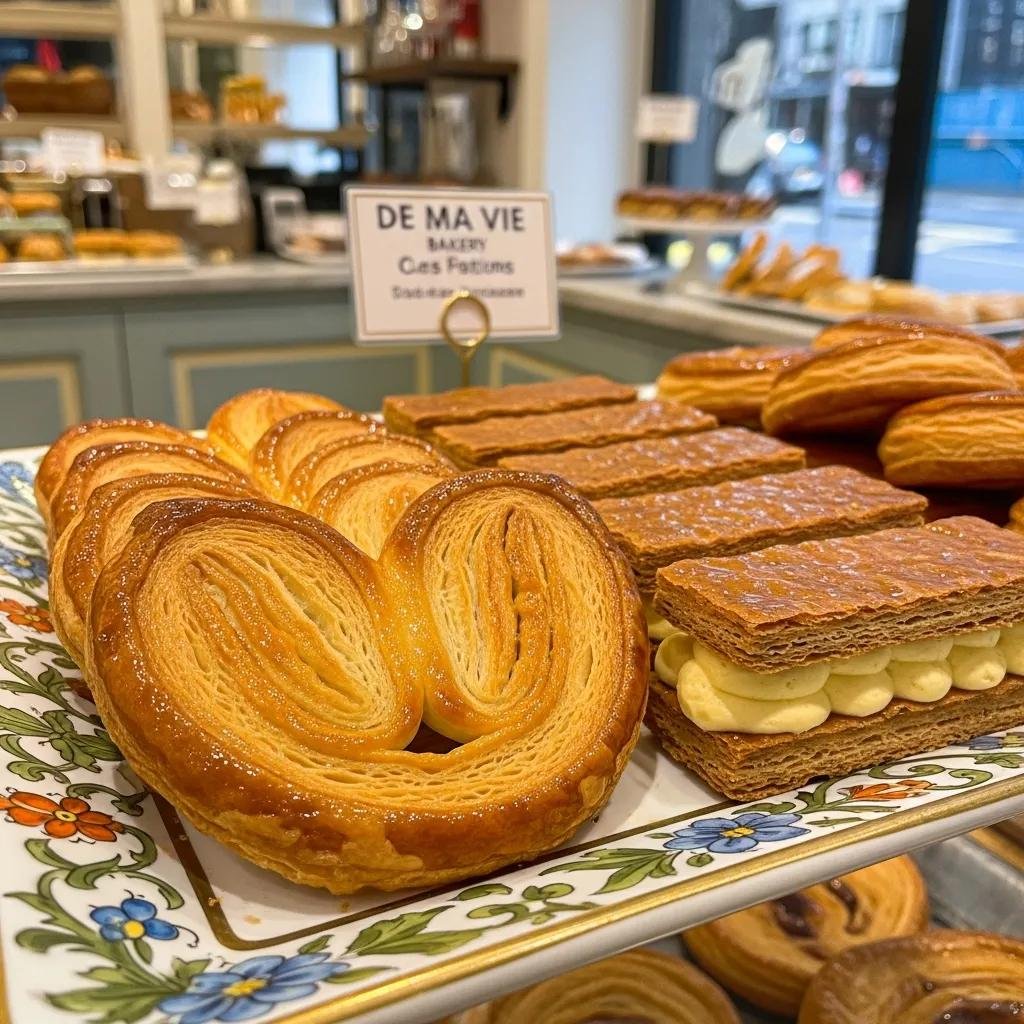
De Ma Vie Bakery is renowned for its authentic French pastries, including signature items like Le Palmier and Mille-Feuille. The bakery employs traditional techniques and high-quality ingredients to create pastries that are both visually stunning and delicious.
What Makes De Ma Vie’s Puff Pastries Authentic and Unique?
The authenticity of De Ma Vie’s puff pastries lies in their commitment to traditional French baking methods. The bakery sources premium ingredients, including European-style butter, which enhances the flavor and texture of their pastries. Each item is crafted with care, ensuring that the final product reflects the artistry of French pastry-making.
How Does Bakery Craftsmanship Enhance Flakiness and Flavor?
The skill of the bakers at De Ma Vie Bakery plays a significant role in the quality of their puff pastries. Attention to detail during the lamination process, along with a deep understanding of dough behavior, allows them to achieve exceptional flakiness and flavor. The bakery’s dedication to craftsmanship ensures that each pastry is a true representation of French culinary excellence.
How Can You Enjoy and Pair French Puff Pastry at Home or Locally?
Enjoying French puff pastry can be a delightful experience, whether at home or from a local bakery. There are various ways to savor these pastries, and pairing them with the right beverages can enhance the overall experience.
What Are Ideal Beverage Pairings for Puff Pastry?
When it comes to pairing beverages with puff pastry, several options complement the flaky texture and rich flavors. Consider these pairings:
- Coffee: A rich espresso or cappuccino pairs beautifully with sweet pastries like croissants.
- Tea: A delicate black or herbal tea enhances the flavors of savory puff pastries.
- Sparkling Wine: The effervescence of sparkling wine contrasts nicely with the buttery layers of puff pastry.
Where to Order Authentic French Puff Pastries in Falls Church, VA?
For those looking to indulge in authentic French puff pastries, De Ma Vie Bakery is the perfect destination. Located at 7787 Leesburg Pike, Falls Church, VA, the bakery offers a wide array of freshly baked pastries, including their signature Le Palmier and Mille-Feuille. Customers can enjoy the enchanting atmosphere while savoring these delightful treats.
What Are Common Challenges in Making Puff Pastry and How to Troubleshoot Them?
Making puff pastry can be challenging, and several common issues may arise during the process. Understanding these challenges and how to troubleshoot them can lead to better results.
How to Avoid Butter Leakage and Dough Shrinkage?
Butter leakage and dough shrinkage are common problems when making puff pastry. To prevent these issues, ensure that the butter is cold and properly encased in the dough. Additionally, avoid overworking the dough, as this can lead to gluten development that causes shrinkage during baking.
What Are Tips for Proper Chilling and Baking Temperatures?
Maintaining the right temperatures is crucial for successful puff pastry. The dough should be chilled between folds to keep the butter firm, and the oven should be preheated to a high temperature (around 400°F or 200°C) to create steam quickly. This steam is essential for achieving the desired puff and flakiness in the final product.


